The canary in the coal mine has a name: Sable Shearwater
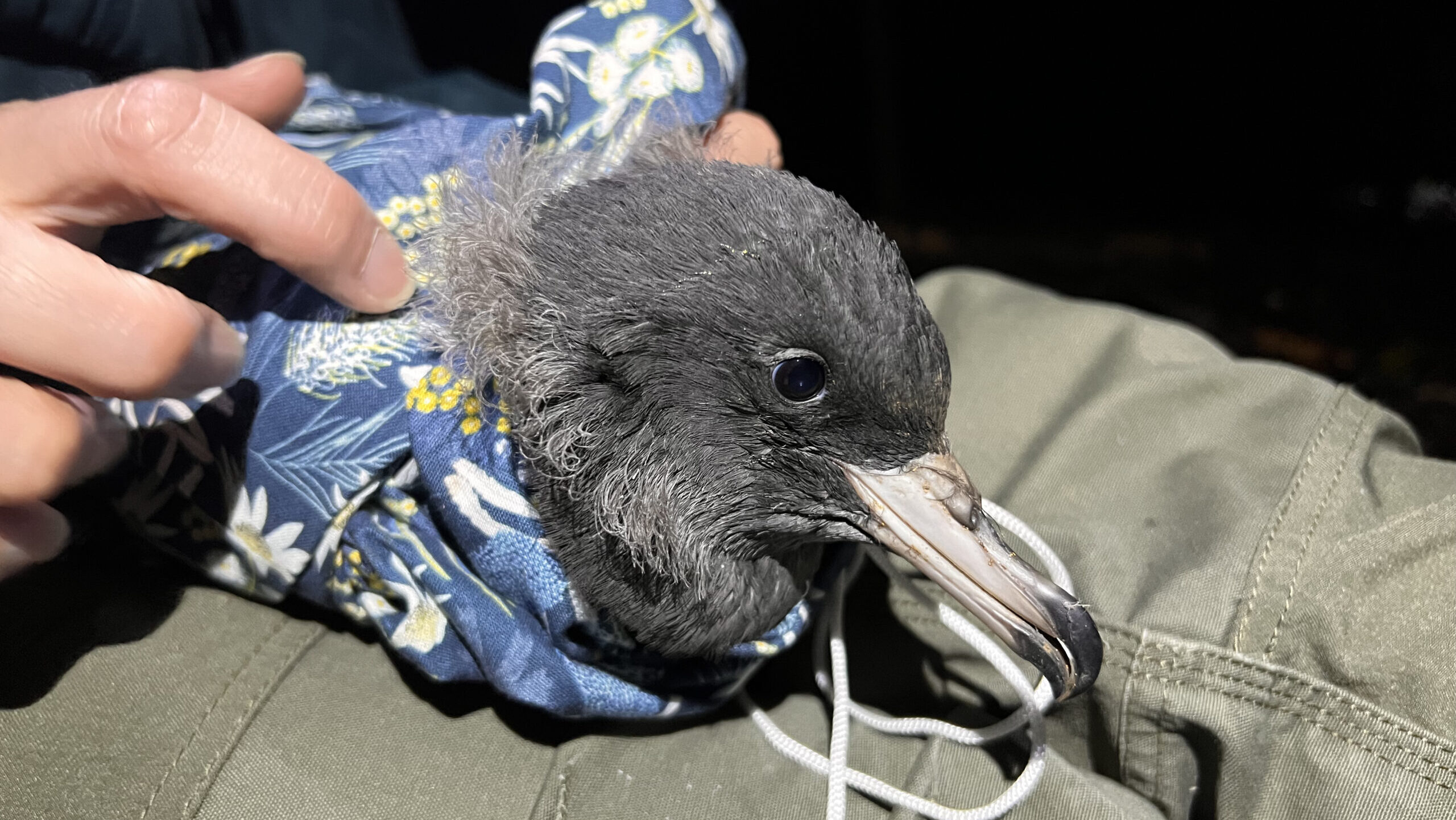
When a canary stops singing in a coal mine, miners don’t assume parrots would be fine. That intuition (obvious in the context of industrial safety) is one environmental science has been surprisingly reluctant to apply to plastic pollution. A new Adrift Lab paper published in Environmental Science & Technology argues it’s time to change that.
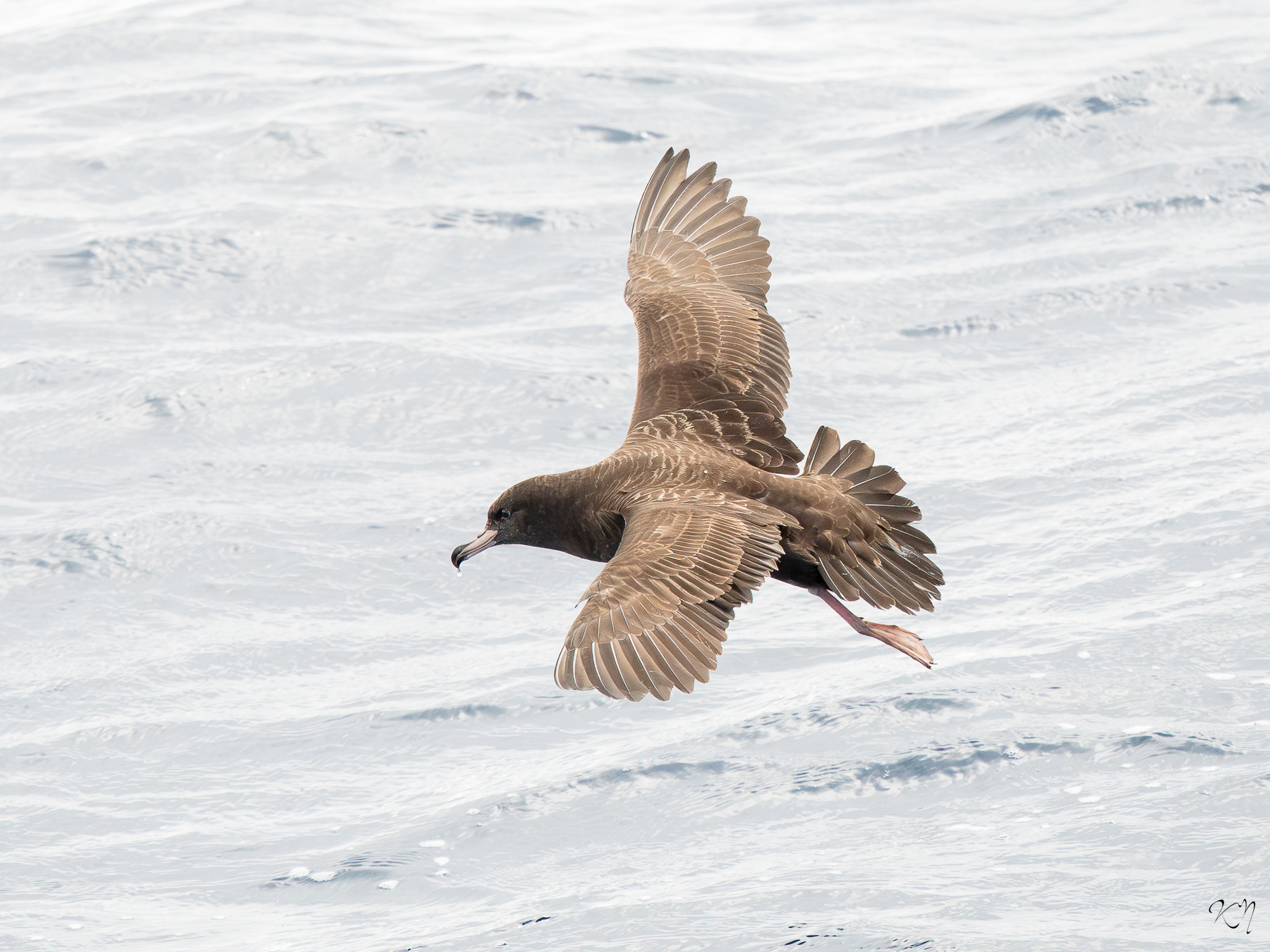
The paper centres on a single species: the Sable Shearwater (Ardenna carneipes), a medium-sized seabird that breeds on Lord Howe Island in the Tasman Sea and forages across the South Pacific. In many respects, it’s a biologically unremarkable bird — no unusual diet, no extraordinary physiology, nothing that sets it meaningfully apart from the dozens of other shearwaters and petrels that wheel across the world’s oceans. What is remarkable is how much plastic it carries.
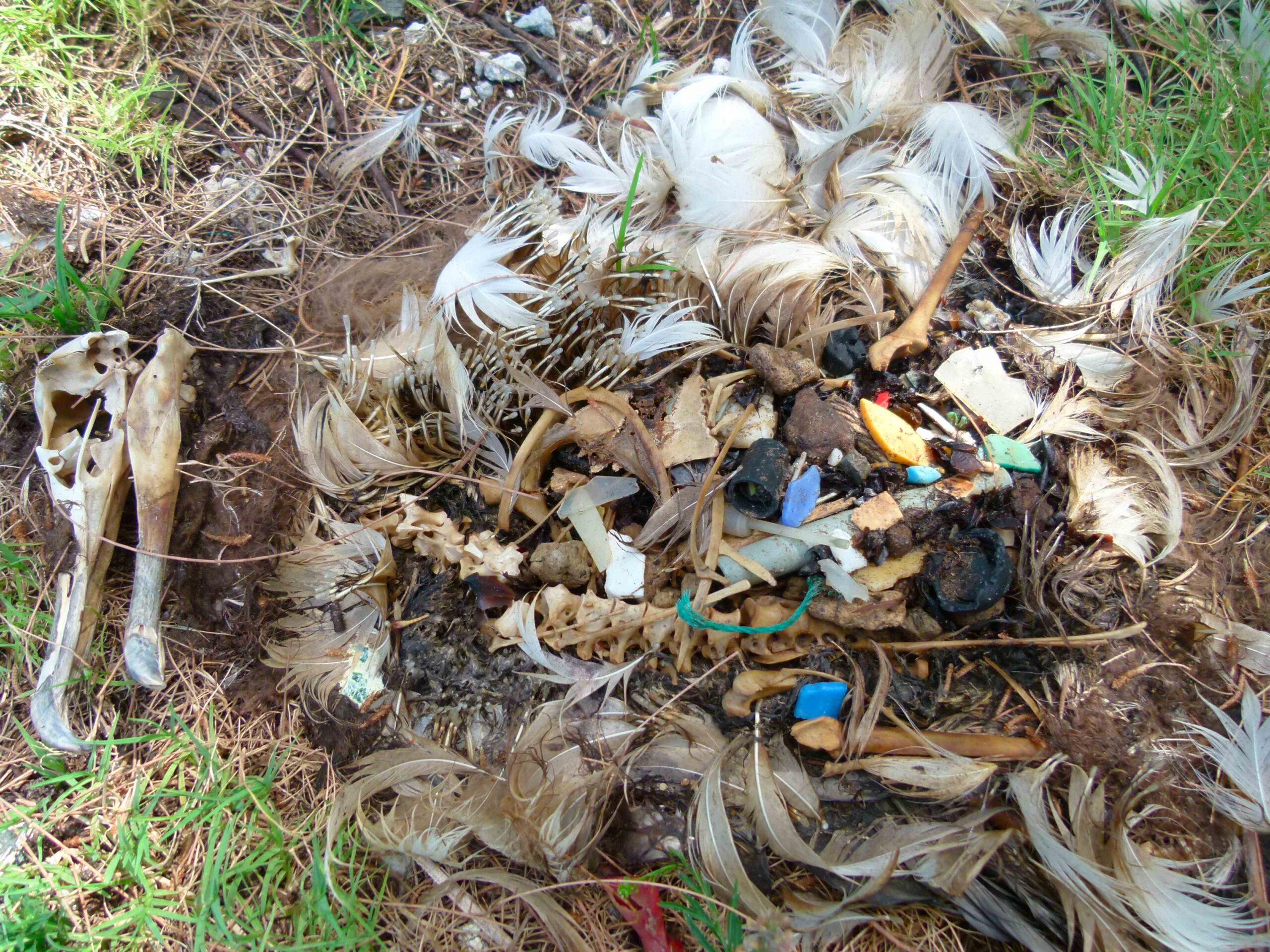
Around three-quarters of Sable Shearwater chicks ingest plastic every year, fed to them by parents who mistake floating debris for food. Some chicks contain nearly 900 individual pieces. The most severely affected carry more than 30 grams of plastic in a body the size of a small chicken. And crucially, we can now measure what that does to them: altered blood chemistry, disrupted organ function, reduced survival. Effects are detectable at plastic masses as low as 0.2 grams — a fragment smaller than a fingernail.
This matters beyond Lord Howe Island for a simple reason: Sable Shearwaters aren’t special. Their digestive anatomy, metabolic constraints, and chick-rearing strategies are shared with dozens of other seabird species — albatrosses, petrels, shearwaters, fulmars — all of which regularly ingest plastic too. The biology that makes Sable Shearwaters vulnerable is the same biology those other species have. So why, then, do we so rarely see the same documented harm that we find in Sable Shearwaters in other species?
The uncomfortable answer is that we’re mostly not looking in the right way, in the right places, at the right time.
When a seabird dies at sea, its carcass typically persists for around eight days before sinking or being scavenged. Fewer than five percent of birds that die within fifty kilometres of a coastline ever wash ashore. Of those that do, many are scavenged or buried before anyone finds them. Death from plastic ingestion often looks, superficially, like death from starvation — and in many studies it’s recorded as exactly that. The ocean is extraordinarily good at hiding its victims.
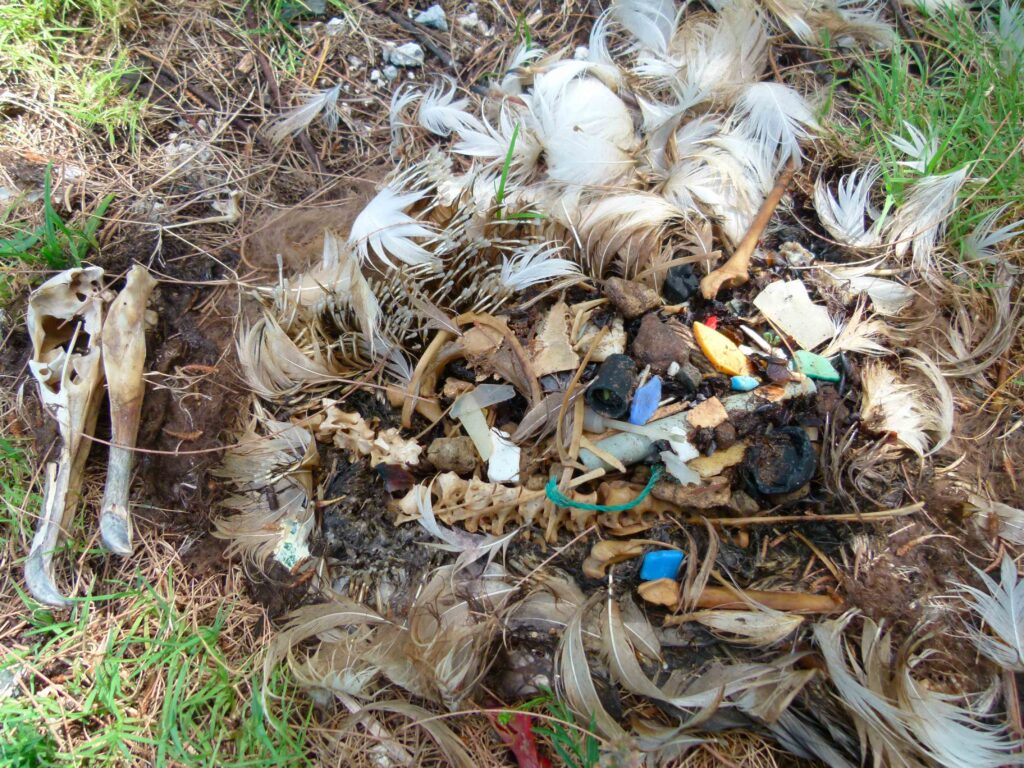
Sable Shearwaters are exceptional not because they respond differently to plastic, but because their circumstances make the effect visible. Lord Howe Island has no rodents (eradicated in 2021), reduced fisheries interactions, good habitat protection, and low concentrations of other contaminants. Plastic burden varies enormously between individual birds in the same breeding season — from zero to more than 30 grams — creating, in effect, a natural experiment. Strip away the noise and the signal comes through clearly. In most other systems, that signal is real but buried.
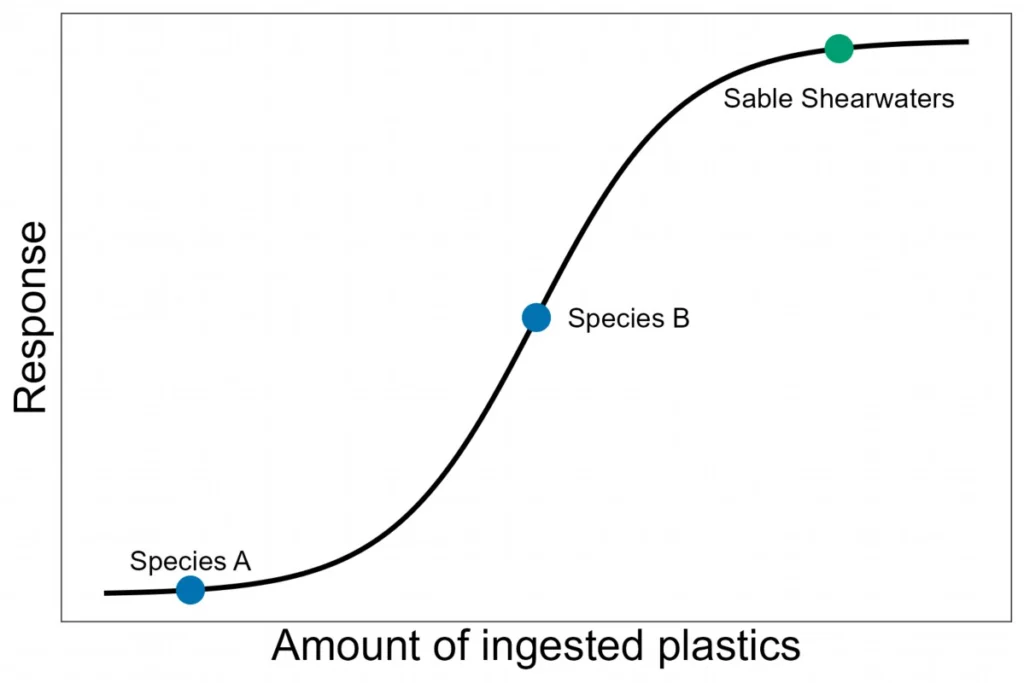
The paper frames this using a dose–response curve. Near one end sits a species ingesting almost no plastic: no measurable effect. Further along the curve sits a species with moderate burdens, probably experiencing sublethal (negative) effects we haven’t detected. Further still — at the far end of what we currently know — sit Sable Shearwaters, where effects are measurable, reproducible, and well-documented. The curve’s shape doesn’t change between species. What changes is where each species sits on it today, and where they’ll sit tomorrow as ocean plastic continues to accumulate.
Laysan Albatrosses, to take one example, have been ingesting plastic since the 1960s. Average chick plastic loads more than doubled between 1995 and 2012. Their population trajectory has been used repeatedly to argue that plastic can’t be that harmful — the birds seem stable enough. But the same population has never recovered to pre-1900 densities, and the IUCN projects a 20–29% decline over the coming decades. Stability is not the same as thriving. And even if overall population trends were stable, to suggest plastic has no effect is, frankly, not borne out by the evidence – with plastic removed, there could potentially be thousands more Laysan Albatrosses.
The point isn’t to be alarmist. It’s to be precise about what “no evidence of harm” actually means. In most seabird species, it means we haven’t looked hard enough, in the right way, under the right conditions. It does not mean harm isn’t happening.
International efforts to regulate plastic production have stalled. The Global Plastics Treaty negotiations have now gone through six rounds without agreement, and its pace has become slower than glacial. Meanwhile, Sable Shearwater chicks are carrying more plastic than ever before.
They are not an outlier. They are a preview.
Recent news posts

Subscribe for updates
Keep up to date with what we’re working on! We’ll send you emails about the lists you opt in to, and you can unsubscribe at any time.