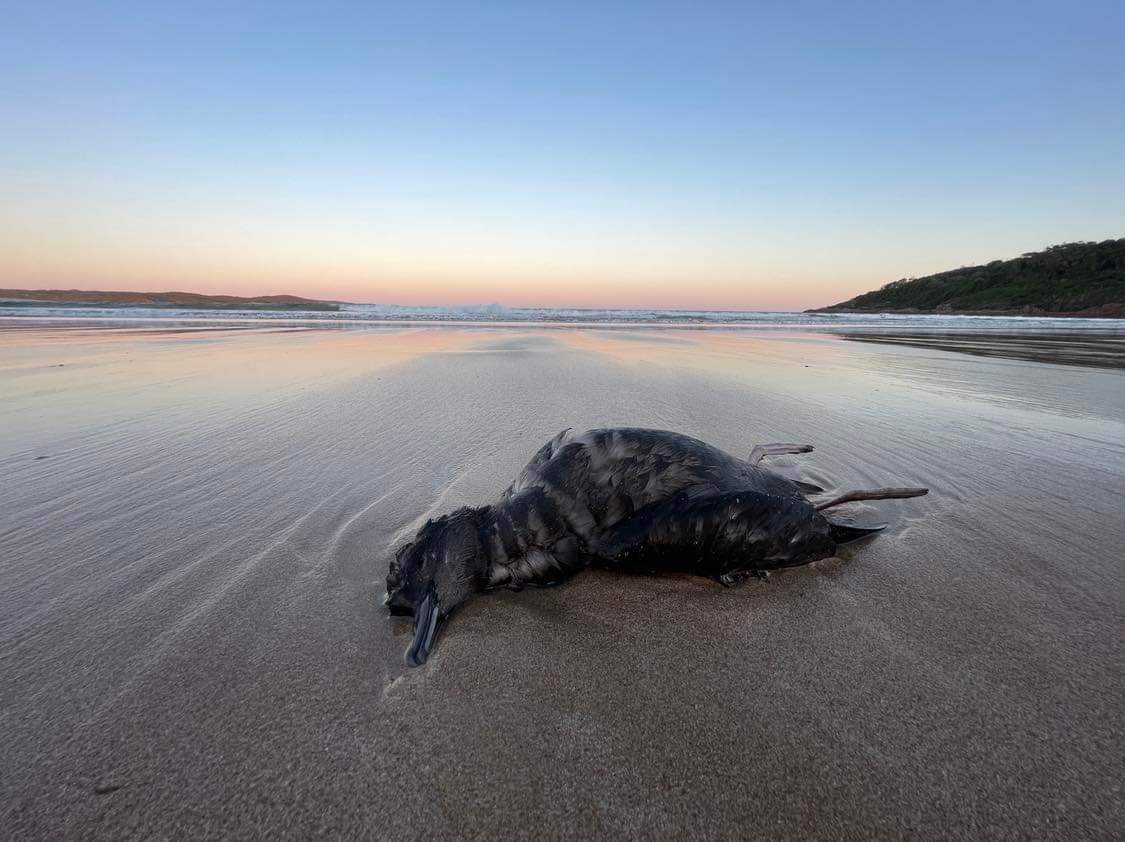
Report beached birds
Avian flu warning
The H5N1 strain of avian flu was detected on the Australian mainland in June 2026, and as a result, additional caution and advice are being released that are especially relevant to beach walkers, including volunteers (citizen scientists) who are regularly reporting beach-washed seabirds to this national monitoring database. We thank you for your support and data contributions over many years; these data have played an important role in establishing ‘baseline’ mortality for different species and regions across Australia. With the arrival of avian flu, it is especially important to:
- Stay up-to-date (detailed and regularly updated guidance here)
- Ensure you do not touch any beach-washed seabirds when collecting photographic evidence.
- Groups of five (5) or more dead birds on a beach should immediately be reported to the 24-hour Emergency Animal Disease Hotline on 1800 675 888