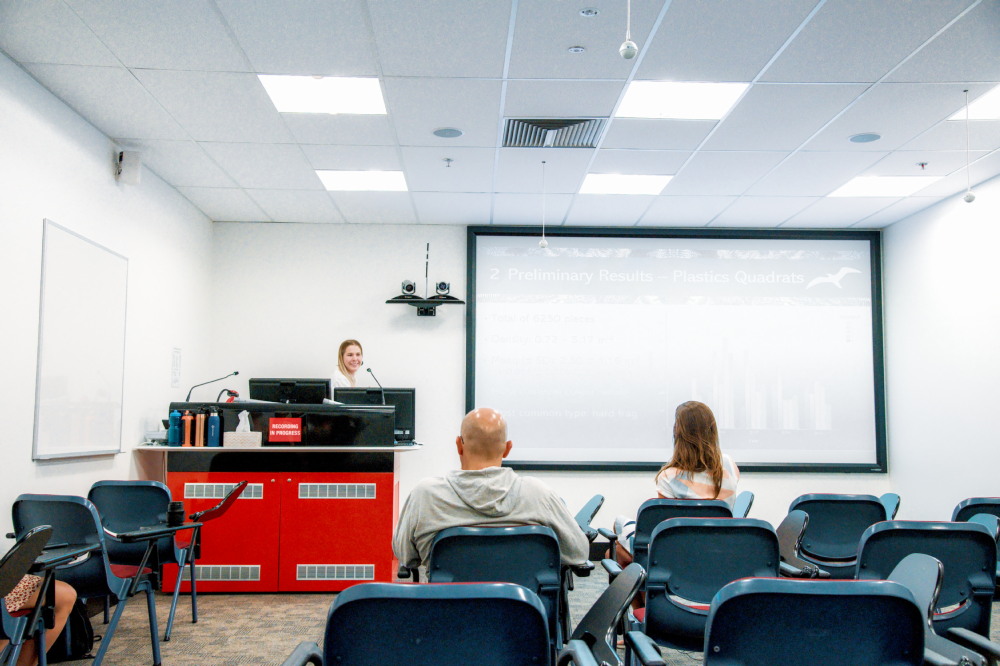
Our Research
The ocean is not a static place. It accumulates plastic, chemicals, and reflects the consequences of decisions made on land. The wildlife that depends on the ocean absorb those consequences in ways that are rarely visible until the damage is severe.
Adrift Lab exists to make the complexity of those consequences legible and understandable to diverse audiences: to document, measure, and communicate what is happening to marine ecosystems so that the evidence exists to act on it.
We are a research cooperative, not a single institution. Our team spans Australia, Aotearoa New Zealand and the United Kingdom, and our field sites cover oceans and islands around the world. We combine laboratory analysis, field ecology, and statistical modelling, and we work in close partnership with communities, policymakers, and other research institutions. What unites our work is a commitment to long-term, rigorous science that is connected to the real world.
Seabirds as Sentinels
Seabirds are among the most sensitive indicators of ocean health. They range over vast distances, feed throughout the water column, and accumulate in their bodies a record of what the ocean contains. For Adrift Lab, they are both a subject of study and a monitoring tool — a biological instrument for reading the state of the sea.
Our flagship long-term study is based on Lord Howe Island, a UNESCO World Heritage Site in the Tasman Sea. We have been monitoring plastic ingestion by Sable Shearwaters (Ardenna carneipes) on Lord Howe Island since 2007. That dataset is the longest-running time series of plastic ingestion in any seabird species anywhere in the world. It tells us not just how much plastic birds are eating today, but how that has changed over two decades, and what the trajectory looks like into the future.
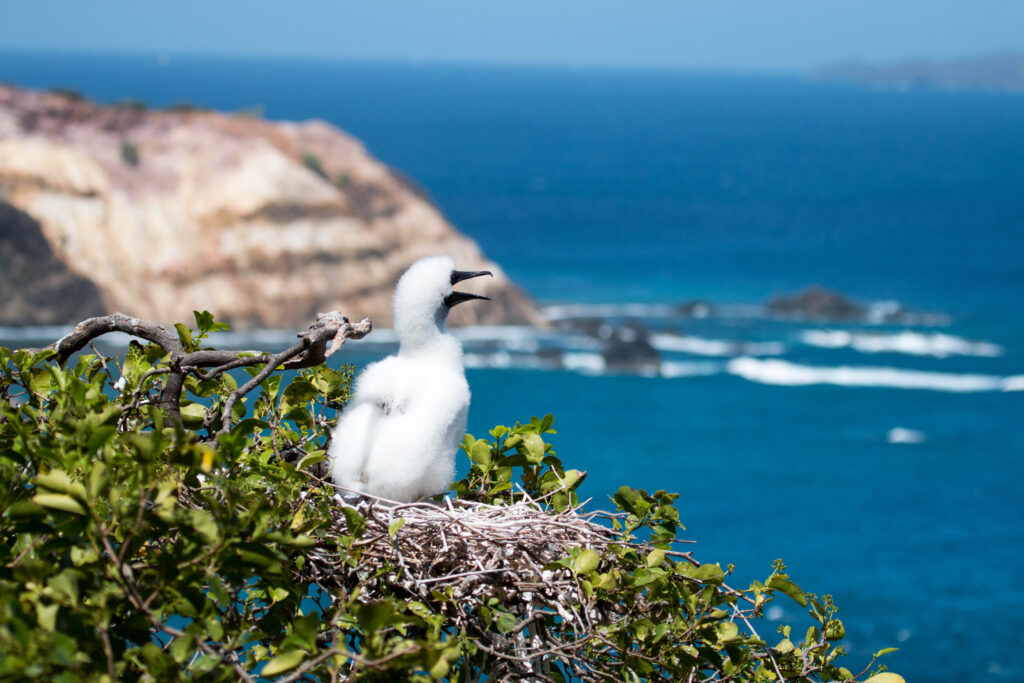
We also work in other ocean basins, and with other marine species. We study seabirds on the Pitcairn Islands, one of the most remote inhabited places on Earth and a site of exceptional ecological significance. These populations are globally significant and information about them is poorly known – including even what species are there and when.
In the Timor Sea, Bedout Island is a key seabird breeding site for Australia, but one that is highly vulnerable to the effects of climate change. It’s not easy to get there, so we know very little about it
Discovering What Plastic Actually Does
For most of its history, plastic pollution research focused on the visible: how much plastic wildlife ingests, where it comes from, how it concentrates in certain habitats. Adrift Lab has spent the past decade pushing beneath that surface, into what plastic actually does to the bodies of the animals that ingest it.
This work has led to discoveries that have changed how scientists understand plastic as a biological hazard.
In 2023, our team described Plasticosis — a previously undocumented disease caused by chronic plastic ingestion, characterised by widespread fibrotic scarring of the digestive tract in seabird chicks.
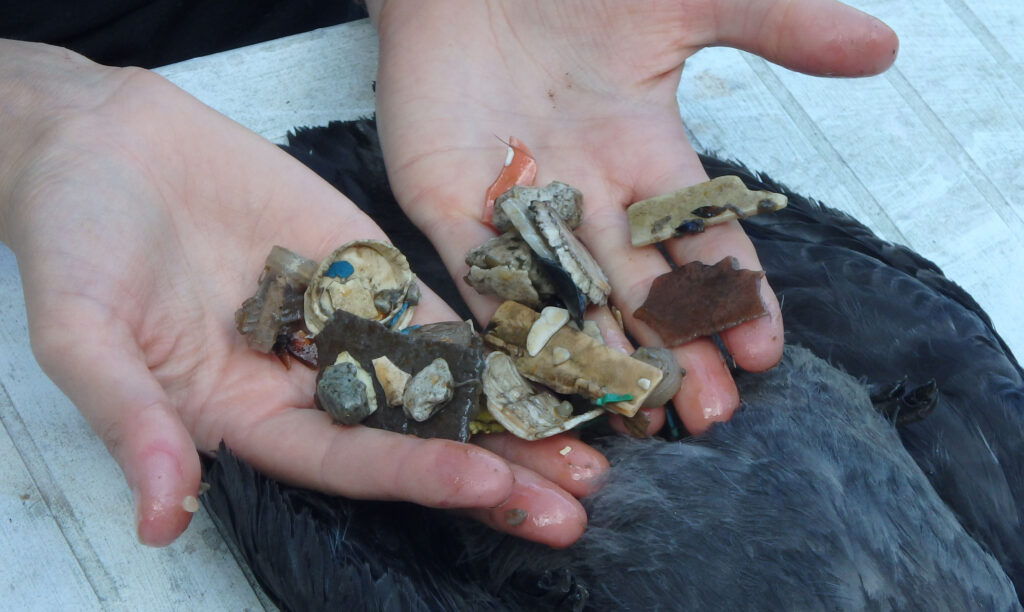
The name reflects the condition’s structural similarity to other fibrotic diseases like asbestosis, and its cause: plastic, specifically. The paper was the first to formally characterise plastic-induced fibrosis in any wild species, and its findings have been covered by media organisations worldwide.
More recently, we documented protein-level signatures consistent with neurodegenerative disease — including changes associated with Alzheimer’s disease — in the tissue of seabird chicks as young as 80 days old. These chicks had never fed themselves. Every piece of plastic in their bodies was delivered by a parent. The findings represent some of the most alarming evidence yet produced of the systemic consequences of plastic ingestion at the cellular level.
This body of work — on sub-lethal, largely invisible effects — is where we believe some of the most important science in marine pollution research is still waiting to be done.
Plastics, Contaminants, and Food Webs
Plastic does not arrive in the ocean alone. It carries with it a cargo of chemical contaminants — additives incorporated during manufacture, and persistent pollutants that adsorb onto plastic surfaces from the surrounding seawater. These include heavy metals, flame retardants, and other substances with well-documented toxicological effects.
Our research examines how these contaminants move through marine food webs — from plastic, into the animals that ingest it, and in some contexts into the food systems that human communities depend on. This work connects marine ecology to human health, and it informs our approach to policy engagement and community partnership.
Diverse threats and diverse approaches
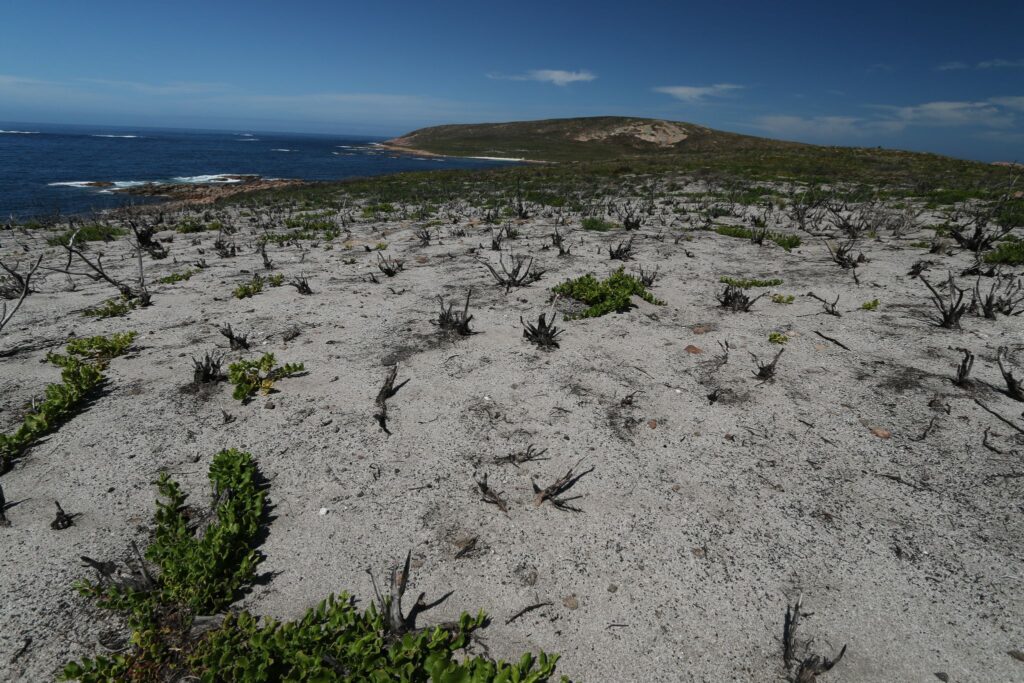
We do more than study plastic – island and bird conservation is at the heart of Adrift Lab, whether that’s the impact of invasive species, or the increasing threats of bushfires and marine heatwaves. We also look at how science is done, and advocate for more holistic and inclusive approaches to understanding and solving environmental challenges.
Research That Reaches Beyond the Lab
We believe that science which stays inside the scientific literature is only partially doing its job. Our publications are written to inform policy, not just to advance academic knowledge — and we work actively to translate our findings into forms that communities, regulators, and the public can use.
Our research has informed waste and marine policy discussions in Australia, the United Kingdom, and internationally. It has been cited in regulatory consultations, communicated through public events and media coverage, and shared directly with the island communities whose environments we study.