Old Projects, New Life – and why some species of seabird ingest more plastic than others
Some research projects are born in a burst of enthusiasm and finish within a few years. Others take a much longer road. This one started in 2016. For a while it sat on the shelf, as projects do when careers move on, funding dries up, and the urgent work of the week takes over.
Then two early-career researchers picked it up.
Nia Potapova and Chrissie Potter, under the supervision of Natalie Cooper at the Natural History Museum in London took a project that had stalled and gave it a second life. They carried out a substantial amount of data collection covering 8 years of plastic ingestion data, ran new analyses, and wrote the paper that is now published in Biology Letters. Their work turned something that had been waiting a long time into research that can inform conservation.
What the paper found
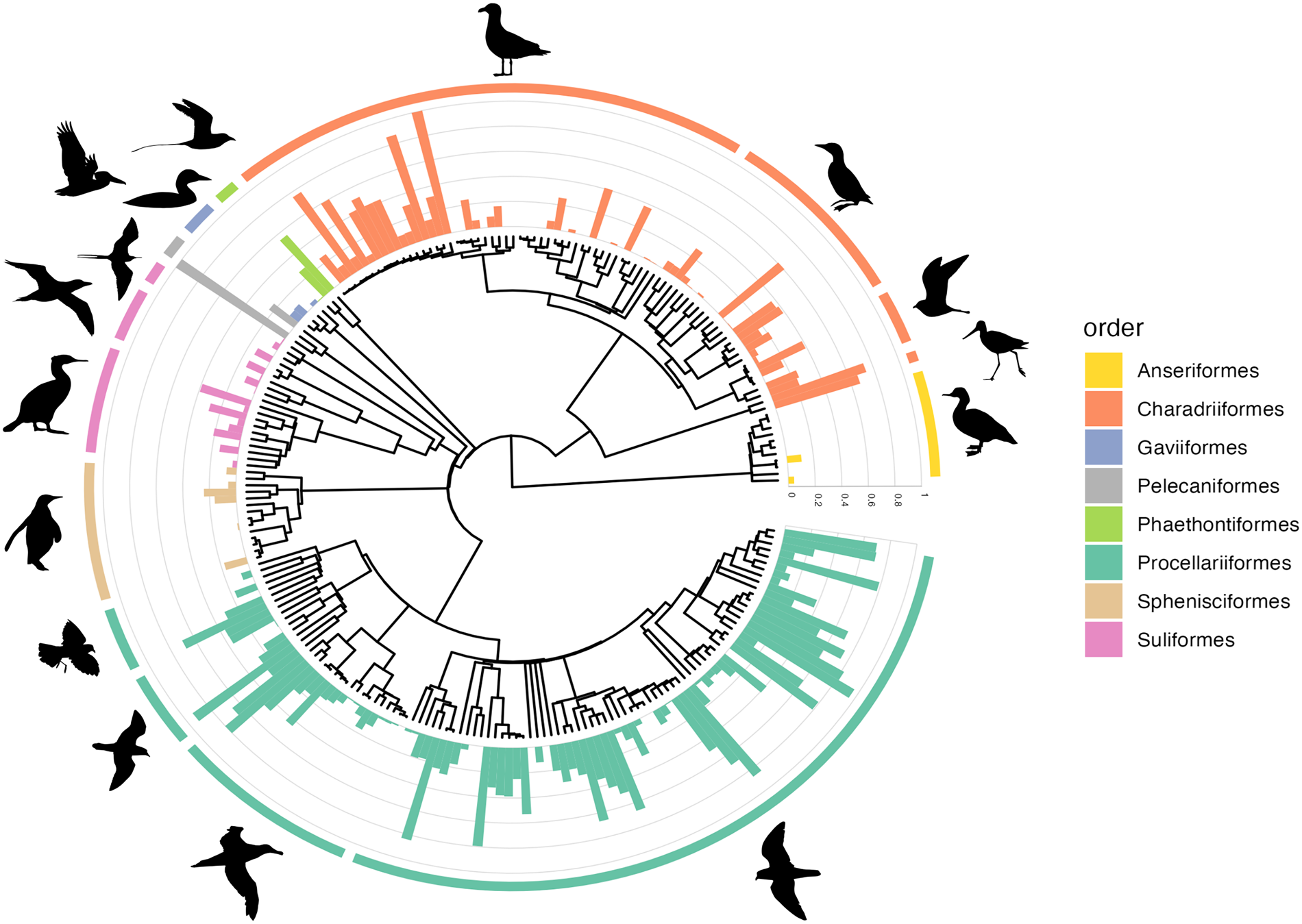
The study brings together plastic occurrence records for 93,281 birds from 240 seabird species, making it the largest dataset of its kind to date. Of those 240 species, 182 contained plastic. We wanted to know how plastic ingestion varied across all seabirds, and why.
Some groups stand out. Pelicans (Pelecaniformes) had the highest weighted mean frequency of occurrence at 66.7%, while penguins (Sphenisciformes) had the lowest at 5.15%.
The more surprising finding concerned why some species carry more plastic than others. We tested diet, foraging method, pelagic specialism, and body mass. Once we accounted for the ways studies differ in design, none of these ecological traits had a consistent effect. Instead, a species’ place on the seabird family tree was the strongest predictor in our models. Evolutionary relatedness appears to track the traits that shape plastic exposure and retention, even where we cannot measure those traits directly.
For conservation, this is useful. Phylogenetic position could offer a quick first screen, flagging species likely to accumulate plastic even where data are scarce. Procellariiformes, which includes the Sable Shearwater at the heart of our long-term work on Lord Howe Island, frequently show high levels of plastic.
Why persistence matters
Projects like this one often have an afterlife. Data gathered years ago can become far more valuable when combined with new records, new methods, and new questions. But that only happens when someone has the time, energy, and permission to pick the work back up. Early-career researchers often do exactly this, quietly and generously, and their contribution rarely makes the headline.
The revival of this project depended on patient collaboration across a wide group of co-authors, data contributors, and reviewers. That is the same spirit behind Adrift Lab’s “Good Science, Good People” ethos. Good science grows out of good relationships, and those relationships give old work room to find a new purpose.
Recent news posts

Subscribe for updates
Keep up to date with what we’re working on! We’ll send you emails about the lists you opt in to, and you can unsubscribe at any time.