Plastic in Paradise? What Seabirds on a Remote Pacific Island Tell Us About Ocean Pollution
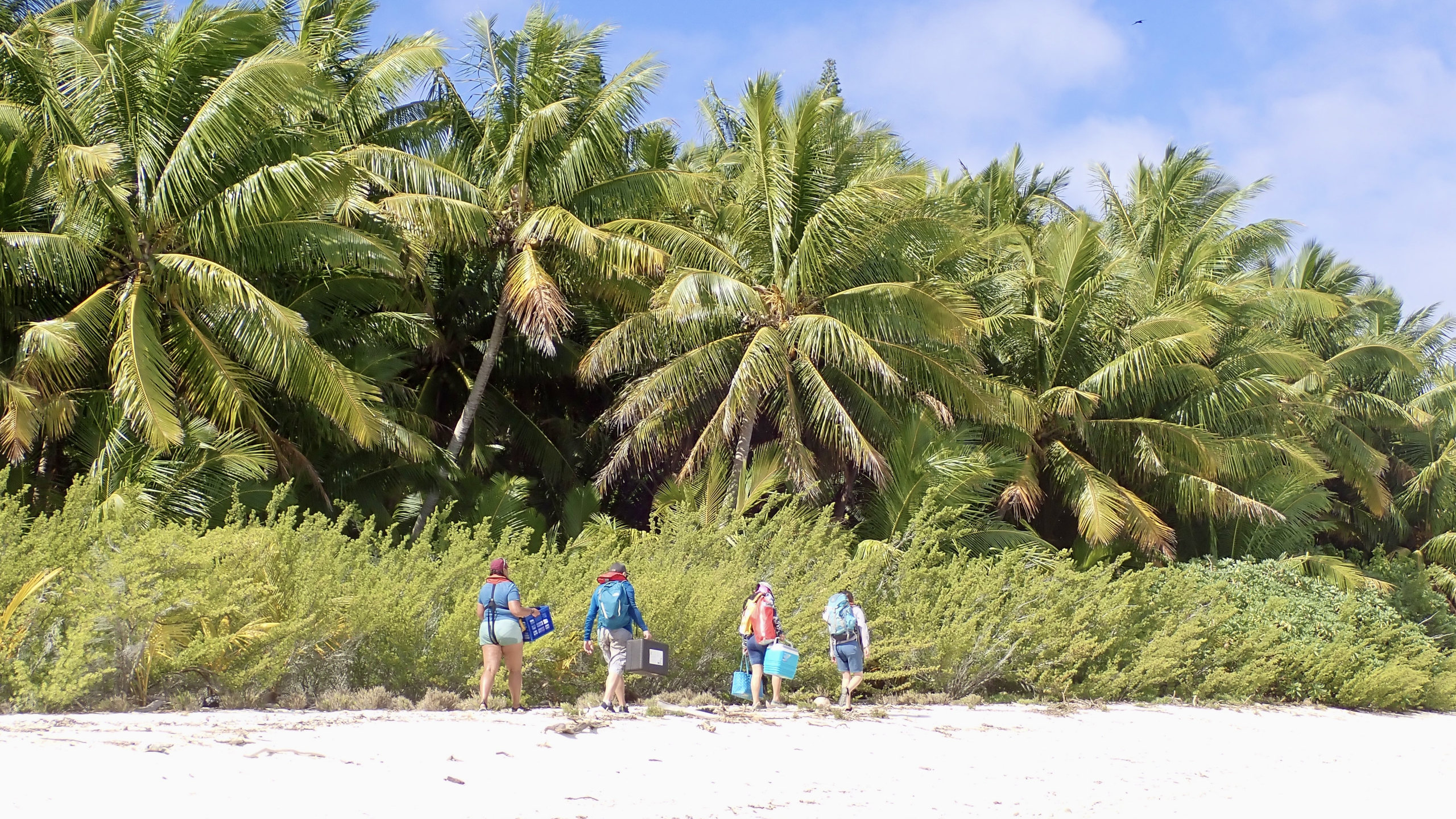
Header photo by Torika Warren-Peu
Imagine an island so remote that the nearest inhabited land is hundreds of miles away, reachable only by a days-long voyage across open ocean. Now imagine finding plastic there anyway. That is the reality facing Henderson Island and Oeno Atoll in the Pitcairn Islands — and it is the backdrop for our latest research into how ocean plastic pollution is affecting one of the Pacific’s most beautiful seabirds.
Subscribe to this series
This is part one of our Pitcairn Island series. Complete this form for email updates when new parts are published!
A Crisis That Reaches Everywhere
Plastic pollution in our oceans is no longer a fringe concern — it is one of the defining environmental challenges of our time. Plastic debris washes up on beaches, drifts through ocean currents, and works its way into the bodies of marine creatures large and small, from whales to fish to seabirds. Recent research suggests the amount of plastic leaking from land into the sea may be far greater than we previously thought, and the consequences for wildlife — at the cellular level and beyond — are still being uncovered.
Seabirds are particularly useful indicators of ocean health. They range across vast stretches of ocean, feed at different depths and locations, and often raise their chicks on remote islands far from human activity. When plastics turn up in their stomachs, it tells us something important about where the pollution has reached — and how much of it is out there.
Meet the Kermadec Petrel
Among the many seabird species navigating a plastic-filled ocean, gadfly petrels — a group known for their swift, swooping flight and their tendency to breed on isolated oceanic islands — deserve far more attention than they currently receive. Many species in this group are threatened, and basic information about their lives, diets, and health is frustratingly sparse.
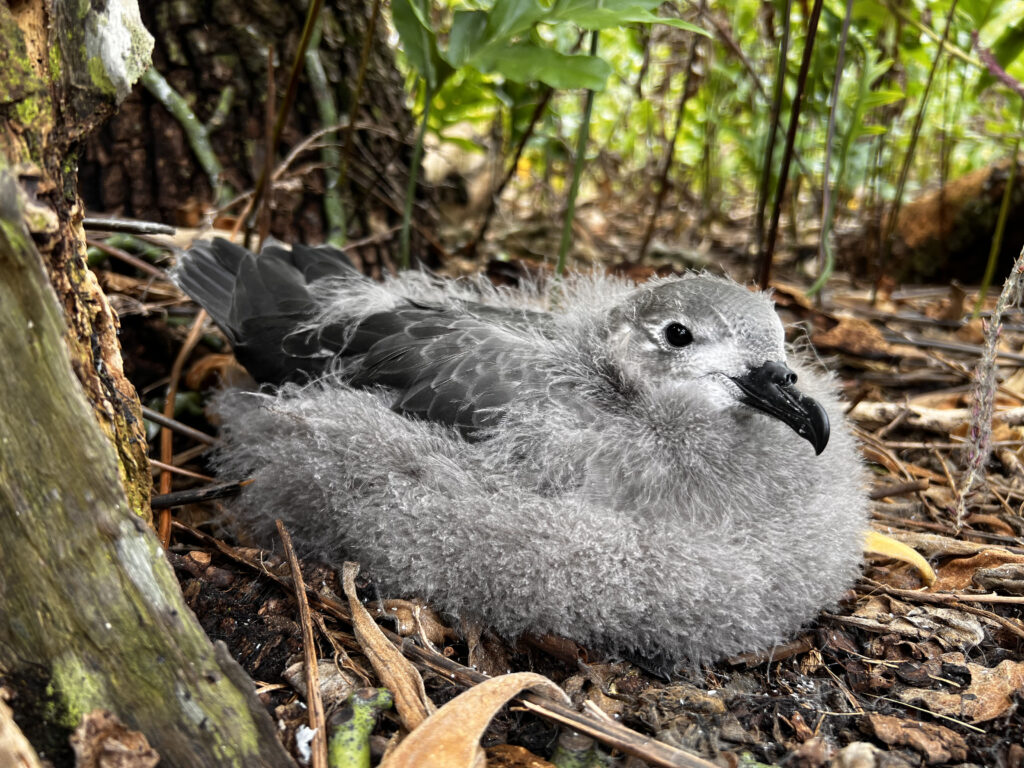
The Kermadec Petrel is a striking example. It breeds across the tropical and subtropical Pacific, including on all four islands of the Pitcairn group, yet it remains poorly understood. The birds make you fall in love with them instantly. They chirrup and chatter as they fly overhead in pairs, their calls echoing off the cliffs of Henderson or the placid lagoon on Oeno. Underfoot, their chicks sit, patiently, on the ground, waiting for their next meal. Like many seabirds, they evolved in the absence of land-based predators, so a protective nest was deemed by evolution to be an extravagance (see photo of a gorgeous chick in its very simple nest).
Historical records of plastic in Kermadec Petrels exist, but they are decades old. Nobody had gone back to check whether the situation had changed — until now.
What We Found
In September 2025, as part of a broader scientific expedition to the Pitcairn Islands, our team sampled Kermadec Petrel fledglings on Henderson Island and Oeno Atoll. These are nest-bound young birds on the cusp of their first flight — an age class that has never before been assessed for plastic ingestion in this species.
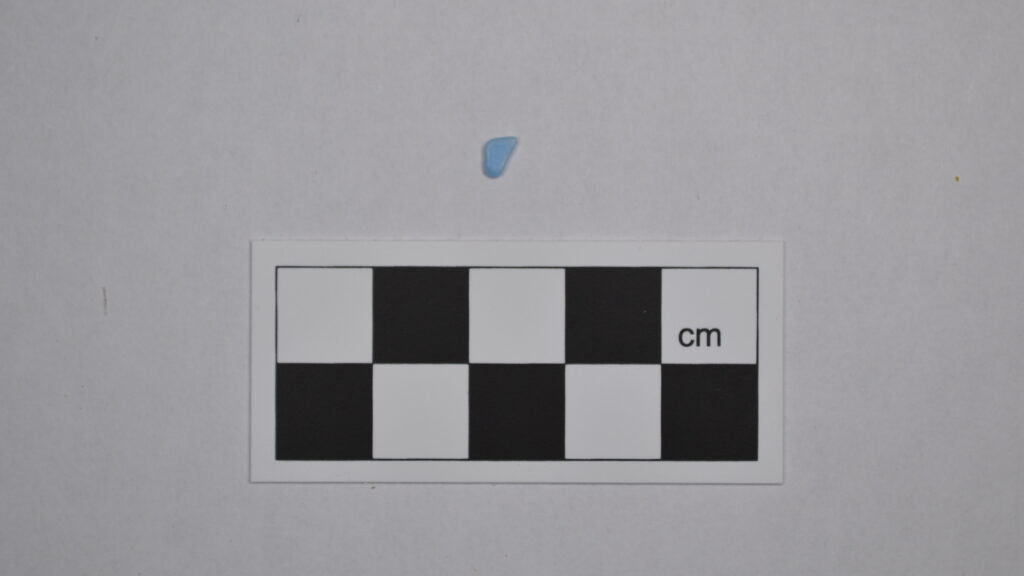
Using a well-established stomach-flushing technique that safely retrieves swallowed material without harming the bird, we were able to examine the contents of each fledgling’s stomach. What we found was, in the context of ocean plastic research, surprisingly reassuring: only a small proportion of birds had ingested any plastic at all, and those that had contained only a few tiny fragments — the kind that can be held on a fingertip (see photo).
Crucially, when we compared our findings with data collected from the same location more than thirty years ago, the picture looked remarkably consistent. The proportion of birds containing plastic had barely changed across three decades.
Why Does This Matter?
At first glance, stable numbers might seem like good news, and in some ways they are. The Kermadec Petrel appears to be faring considerably better than closely related species in the same region. Christmas Shearwaters breeding nearby, for instance, show far higher rates of plastic ingestion. Murphy’s Petrels, recorded on Henderson Island in the same historical study, also showed much higher exposure.
This contrast raises a fascinating ecological question: why are Kermadec Petrels consuming so much less plastic than their neighbours? The answer likely lies in a combination of factors — the types of prey they prefer, the precision with which they select food at the ocean surface, and the specific ocean regions where they forage. Not all parts of the ocean accumulate plastic equally, and a species that feeds in cleaner waters, or that is more discerning in what it picks up, will inevitably ingest less.
Understanding these differences matters because it challenges the assumption that all closely related species face the same risks. Blanket assessments are not enough — regular, species-specific monitoring is essential.
The Importance of the Pitcairn Islands
The Pitcairn Islands Marine Protected Area is one of the largest marine reserves in the world, covering a vast stretch of the South Pacific and providing a refuge for extraordinary biodiversity. Henderson Island, a UNESCO World Heritage Site, and the tiny coral atoll of Oeno are entirely uninhabited and as wild as any place on Earth.
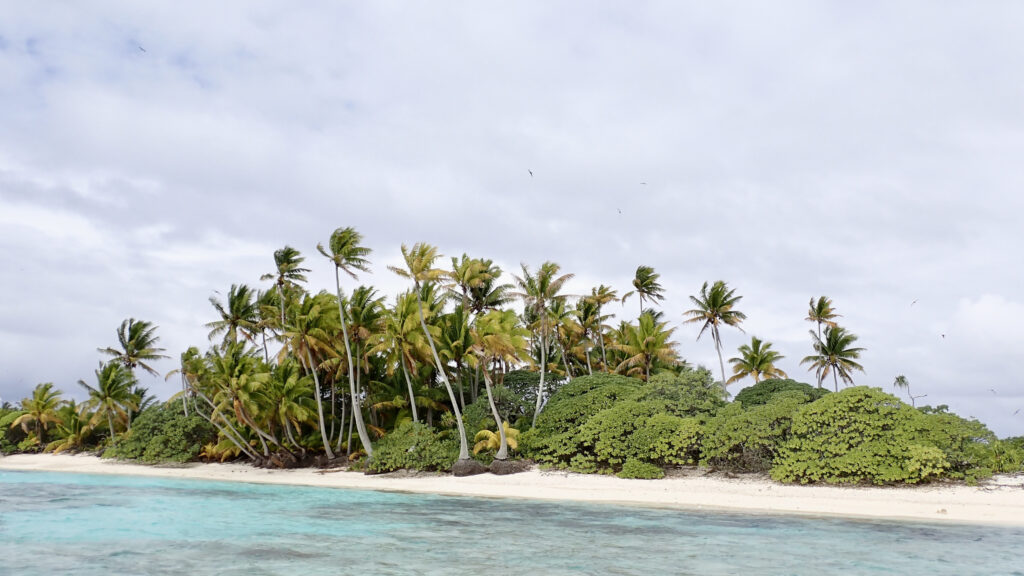
Yet even here, the ocean delivers a steady stream of plastic from elsewhere. The litter on these beaches — shoes, bottles, fishing gear — did not come from the handful of people living on Pitcairn. It arrived carried by wind and current from distant shores, a vivid reminder that pollution does not respect borders, however remote.
This is precisely what makes the Pitcairn Islands so valuable as a monitoring site. Because there is no local source of plastic contamination, any pollution found here — in the water, on the beach, or inside a seabird — reflects the state of the broader ocean. The Kermadec Petrel, uniquely present across all four islands in the group, offers a rare opportunity to track environmental health across this entire protected region over time.
A Word on What Comes Next
The news that plastic ingestion in Kermadec Petrels has remained low is heartening, but it is not a reason to relax. Global negotiations over a binding international plastics treaty have stalled, and without coordinated global action to reduce plastic production and leakage, even the most remote and protected places will continue to absorb the consequences of decisions made far away.
For now, the birds of Henderson Island and Oeno Atoll appear to be holding their own. But they, and their guardians on Pitcairn, deserve better than hope and steady monitoring. They deserve a cleaner ocean.
Our Thanks
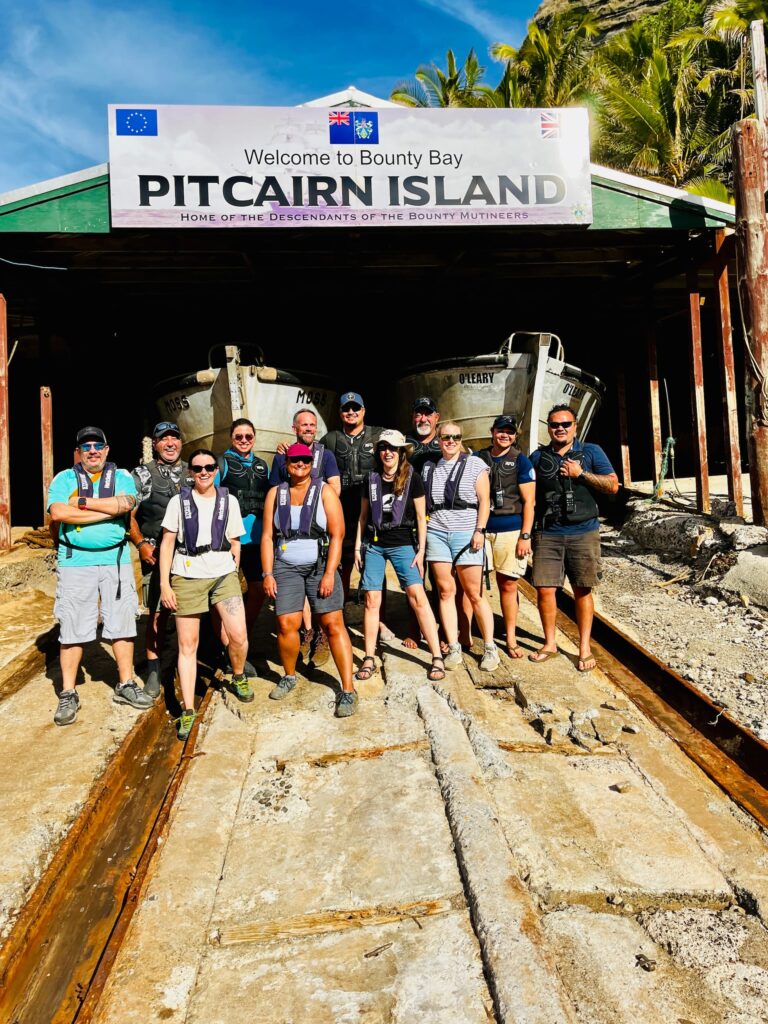
We extend our gratitude to Shawn Christian, Tamatoa Jayden Warren-Peu, Tapuria Kimiora Warren-Peu, Torika Warren-Peu Christian, and Randy Christian for their friendship and skilful assistance on Henderson Island and Oeno Atoll, getting us safely from ship to shore and back again.
On Pitcairn, we also thank Charlene Warren-Peu, Jay & Carol Warren, Daralynn Griffiths, Pawl Warren, Sue O’Keefe, Olive & Steve Christian, and Michele Christian for their gracious and joyful hospitality. We are eternally grateful for the chance to visit and work with you over the years.
We are also thankful to the crew of the MV Silver Supporter for keeping us safe and well-fed, and to the fellow scientists onboard the expedition who provided advice, support, and friendship: Drs Luis Conti, Neil Burns, and Phillipa Rickard. The expedition would not have happened without the support of the Pitcairn Islands Council, Administrator Rachael Midlen, and the monumental efforts of Hannah Wolstenholme and Dr Louise Straker Cox from Cefas.
This research was conducted as part of the 2025 Pitcairn Expedition (Operation Gannet), funded by the UK government’s Blue Belt Programme administered by Cefas and the Pitcairn Islands Office. The study was published the journal Marine Pollution Bulletin.
Lavers, JL, J Christian, and AL Bond. 2026. Low and steady: Minimal change in plastic exposure in Kermadec Petrels in the remote South Pacific. Marine Pollution Bulletin Volume 227, June 2026, 119522
Subscribe to this series
This is part one of our Pitcairn Island series. Complete this form for email updates when new parts are published!